
The end of online dating? Why more people want to meet IRL.
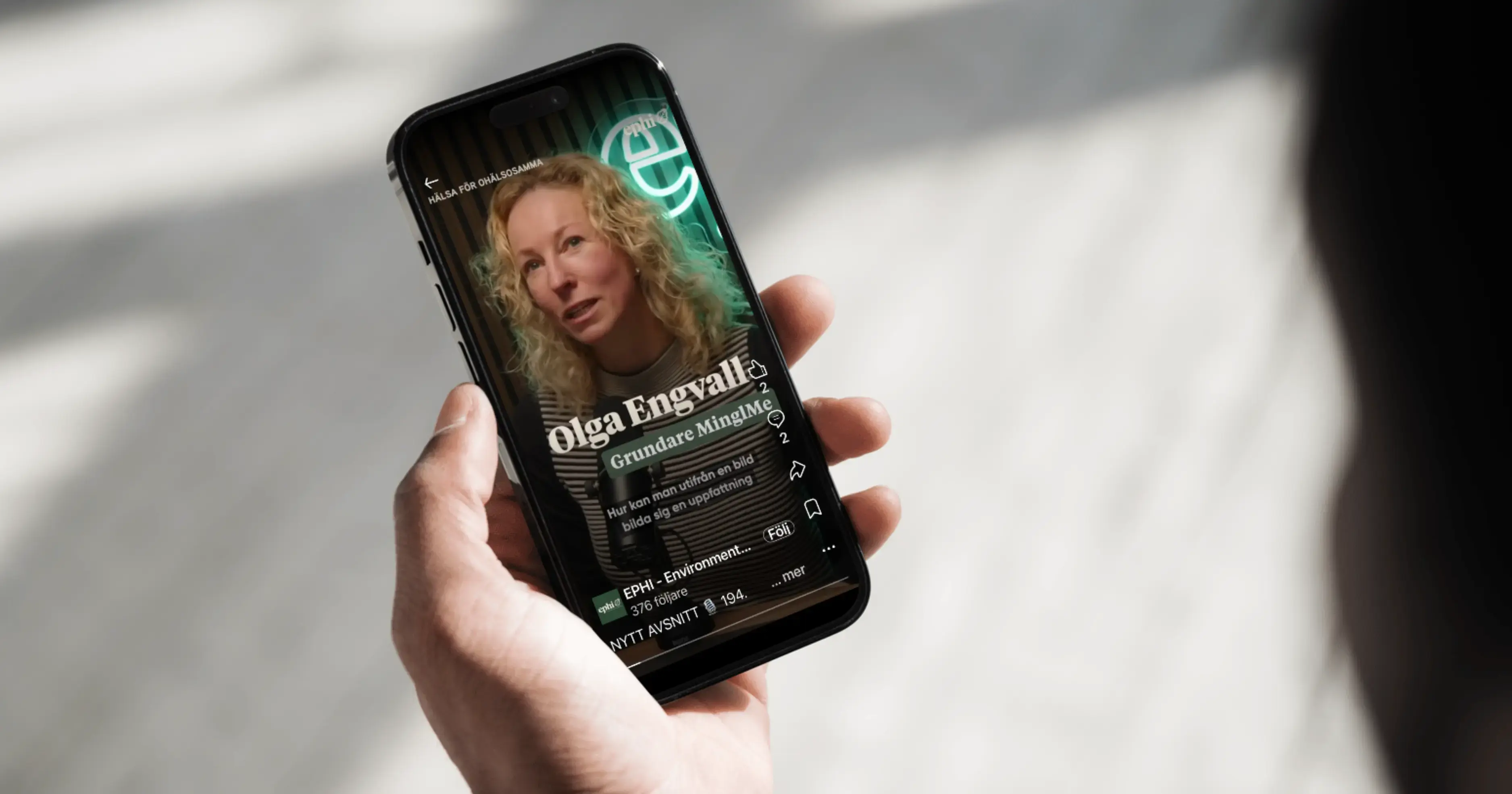
More and more singles are finding that dating apps don't lead to meetings but rather to fatigue, stress, and lower self-esteem. In a recently published podcast episode at EPHI – Environment and Public Health Institute, Olga Engvall, founder of MinglMe, explains why online dating may have reached its peak and why the future of dating might be more analog than digital. Here are the key insights.
Why aren't dating apps working anymore?
Dating apps are designed for quick rewards: swipes, matches, and micro-signals. This keeps us active but rarely leads to real meetings. Many people get stuck in the tool instead of meeting a person. That's why MinglMe has chosen to focus on letting people meet singles IRL through activities – instead of matching profiles.
Has online dating reached its peak?
There's a lot pointing to that. More and more people are tired of "playing Tinder". Apps function in practice as marketplaces where people compare, swap out, and change their minds. At the same time, they're built to keep users stuck in the first phase -chat, not relationship. When the loop no longer feels meaningful, people leave.
Men with fish – women posing: what does the OkCupid study say?
The study from OkCupid shows not only differences in how men and women assess attractiveness but how deeply rooted gender roles shape image culture. Women learn early on to sell themselves visually, while men show what they do. The result is an unreasonable format where we're expected to make life-changing decisions based on a picture. In IRL meetings, this disappears – there it matters less how you pose, and more who you are.
Why are people born in the '80s in particular stopping online dating?
People born in the '80s have been trying the apps the longest. They're digitally savvy, short on time, and have learned that the apps are ineffective when you actually want to meet someone. They also have the resources and drive to find alternatives. They're the first to leave but not the last.
Is it screen fatigue – or something else?
It's primarily about safety. People need context to feel secure: work, friends, interests. Having "all of Sweden's singles in your pocket" often creates stress and choice anxiety. Combined with apps that profit from keeping us stuck in the first phase, it becomes clear why many are moving away.
Do dating apps make people feel psychologically unwell?
Yes. Many experience decreased self-esteem from being judged – or rejected – on appearance. For some, it leads to passivity and loneliness. IRL meetings do the opposite: you feel like a person, not a product.
Do IRL meetings lead to better relationships?
IRL meetings lead primarily to better experiences and better self-esteem. You do something you enjoy – and maybe you meet someone. Or you make a new friend. Regardless of the outcome, you've experienced something meaningful.
What does this mean for the future?
Many people still want to find someone to share their life with. The challenge is that digital dating culture often diminishes the belief that it's possible.
The future of dating is therefore less about smarter algorithms and more about human encounters. More and more people are choosing to dump the dating apps and meet singles IRL in contexts where the meeting can take place for real.
